Moisture-vapor issues aren't unique to wet climates. A concrete slab can carry residual moisture from below-grade sources regardless of surface rainfall — and in Oklahoma, storm damage can add a second, more direct path for moisture to reach a slab or facility floor.
A slab poured on or below grade can carry moisture from the ground itself, moving upward as vapor over time — independent of how much rain falls on the surface above it.
Hail-driven damage to roofing, siding, or garage-door seals can open a new path for wind-driven rain to reach a garage or facility floor directly, on top of whatever below-grade vapor transmission is already happening. That combination can accelerate moisture-related coating or flooring failure faster than either issue alone.
The only reliable way to know is direct testing — calibrated moisture meters or calcium-chloride test kits measure actual vapor transmission from your specific slab rather than assuming based on regional climate or recent storm history.
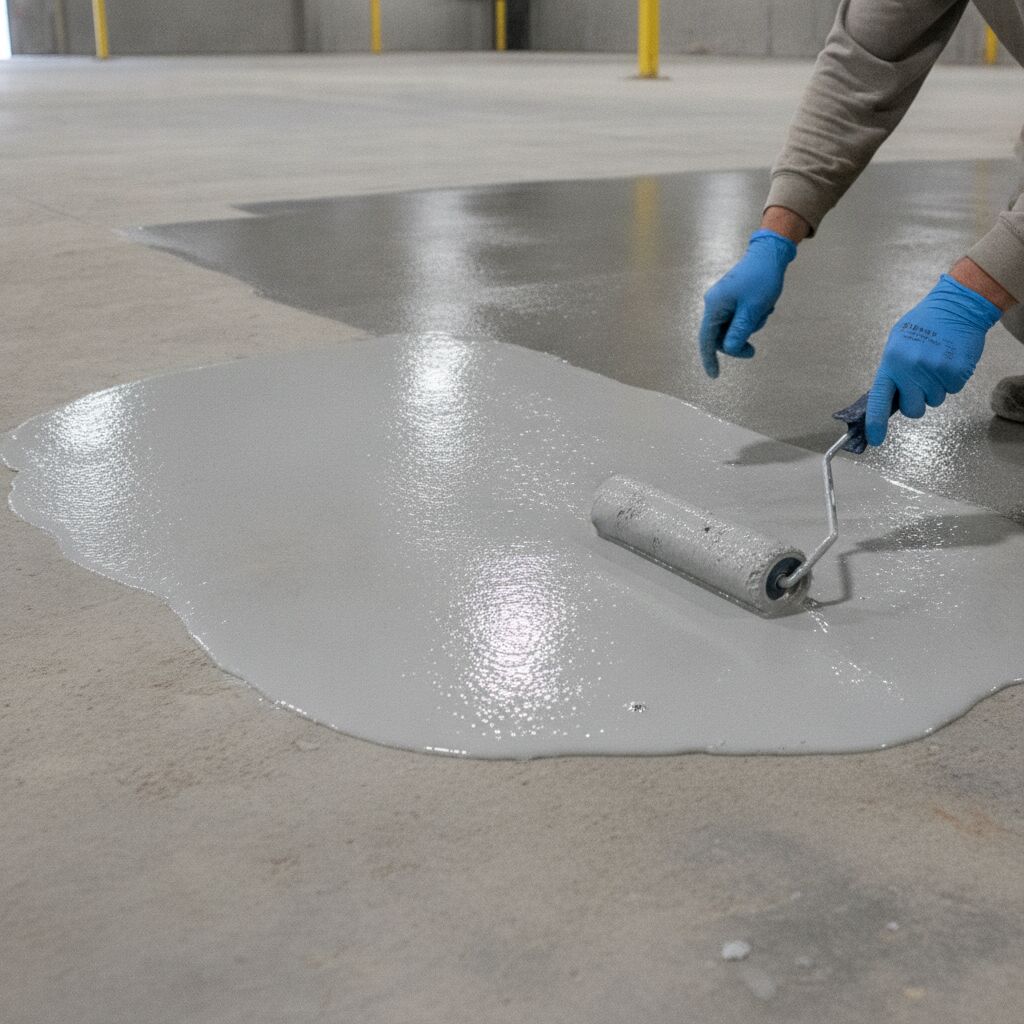
A vapor-barrier primer system, applied before a finish coating or flooring installation, addresses excess moisture-vapor emission directly — whether on new construction or as remediation for an existing slab that's shown signs of moisture-related failure, including after storm damage.
Not sure if your slab needs testing, especially after a recent storm? Oklahoma Polyurea can assess your specific situation — reach out for a free estimate.
No obligation. We'll assess your space and give you a real number.